Getting Started:
This book serves as both a learning guide and a professional reference. Begin with the foundational sections (Introduction, Theory, Eight Dien Chan Principles) to understand the philosophy and science behind the method. Then progress to the practical sections based on your needs.
Understanding Dien Chan Theory:
Read through the theoretical foundation sections carefully. These explain why Dien Chan works: yin and yang balance, synchronic painful points, the law of extremes, and how vital energy flows through the body. Understanding the theory significantly improves your ability to apply the protocols effectively.
Learning the Projection Diagrams:
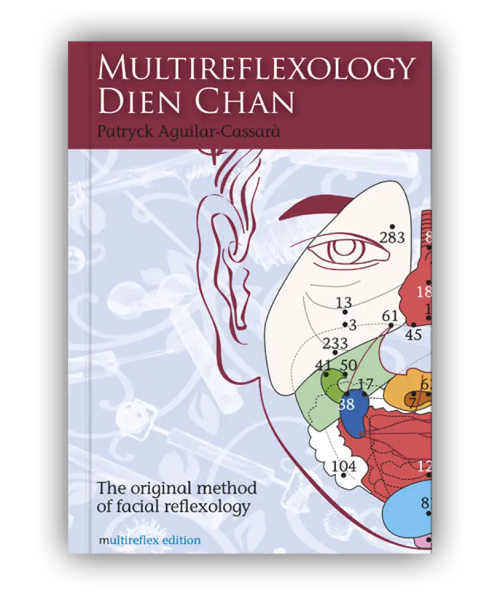
Study each of the 25+ projection diagrams included in the book. These are the foundation of Dien Chan practice—they show exactly where body systems, organs, and structures are "reflected" on the face. Familiarize yourself with:
- Head and brain diagram
- Internal organs diagram
- Arm, shoulders, pelvis, and legs diagram
- Chest, back, and abdomen diagram
- Cranial nerves diagram
Reference these diagrams constantly as you practice. The more familiar you become with them, the more accurate and effective your treatments will be.
The Eight Dien Chan Principles:
Learn and internalize these foundational principles. They guide every treatment decision and explain how the method achieves such rapid results. These principles are the key to understanding when and why to use specific points.
Daily Protocols - Morning Massages:
The twelve morning massages are designed to activate your system, support circulation, and set an energized tone for your day. These protocols can be self-administered or given to clients. Follow the step-by-step sequences provided.
Evening Protocols - Night Massages:
Use these protocols in the evening to calm the nervous system, support detoxification, and prepare for sleep. The sequences differ from morning work to provide balancing, calming effects.
Reflexdrainage Protocol:
Learn the 6-zones massage technique for comprehensive lymphatic activation and toxin elimination. This protocol is foundational to most Dien Chan treatments and can be used for any condition where drainage and elimination support healing.
For Specific Conditions:
Locate your specific concern in the treatment section (headaches, insomnia, digestive issues, circulatory problems, neurological concerns, etc.). The book provides:
- Which facial zones to work
- Which specific points to stimulate
- How long to work each area
- Whether to use pressure, massage, or rolling techniques
- How often to repeat the protocol
Facial Diagnosis:
Learn to recognize clinical signs on the face that indicate which body systems need treatment. The book teaches you to observe facial shape, color, texture, and tenderness patterns to identify underlying imbalances.
Using Multireflex Tools:
The book includes instruction on which multireflex tools work best for different protocols and techniques. Tools are classified and explained with specific applications for each.
Building Your Practice:
Start with the protocols that address your immediate concerns. Master those before expanding to others. As you gain experience, you'll develop proficiency with the complete system. Keep detailed notes on which points are tender, how your face responds to different techniques, and which protocols create the best results for your body or your clients.
For Professional Practitioners:
Use this as your clinical reference guide. The book provides all the information needed to deliver professional-grade Dien Chan treatments. The diagrams, protocols, and principles ensure consistency and accuracy in your practice.
Integrating with Multireflex Tools:
Pair the book's protocols with multireflex tools for optimal results. The book tells you "what" to do and "where" to do it; the tools help you deliver the therapeutic activation prescribed in each protocol.
Progressive Mastery:
This book is designed to deepen as your practice deepens. Each reading reveals new layers of understanding. Practitioners report that after years of study, they continue discovering new insights in the text.
Pro Tips:
- Tenderness in a facial point indicates the corresponding body system needs attention
- Work with light to medium pressure—never force or cause pain
- Consistency matters more than intensity—regular practice creates results faster than occasional intense sessions
- Always begin treatments with calming protocols before moving to activating ones
- Reference the diagrams frequently; familiarity with projection maps is essential to mastery
- Join the International School of Multireflexology - Dien Chan community for ongoing learning and support